
England’s rugby league record: why England and Great Britain must stay separate
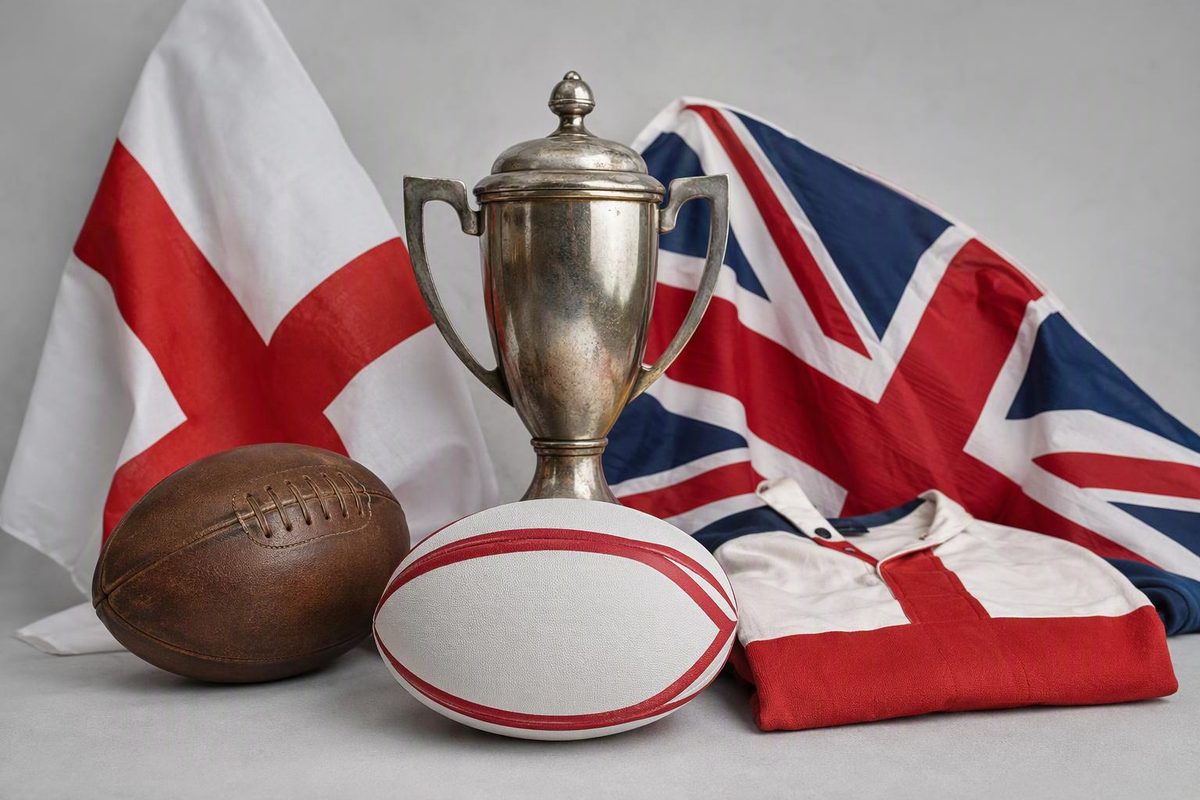
England’s rugby league origins, World Cup runners-up finishes and 2026 results, with the key distinction between England and Great Britain records.
England’s men’s rugby league team has reached two title-deciding World Cup finals, in 1995 and 2017, and finished second in the league-format competition of 1975. Those are three runners-up finishes, but not three equivalent final appearances. The distinction is visible in the 1975 tournament table and the RFL’s account of the later finals. England had not won the men’s title as of 30 October 2026, with that year’s tournament still under way.
The other essential distinction is the team name. England and Great Britain have separate international records. Great Britain’s World Cup victories in 1954, 1960 and 1972 should not be relabelled as England titles. League Information Services’ historical summary explicitly separates the two teams.
This article concerns the men’s international thirteen-a-side game, not domestic club results or England’s separate women’s and wheelchair records.
England’s origins predate thirteen-a-side
The sport began with the northern English clubs’ breakaway in August 1895. England’s first international followed on 5 April 1904, when Other Nationalities—a side comprising Welsh and Scottish players—won 9–3 at Wigan.
That match belongs to rugby league’s early history, but it preceded the adoption of thirteen-a-side and the play-the-ball in 1906. The RFL’s history timeline records both milestones. For researchers, the distinction matters: the beginning of England’s representative history and the beginning of the modern team-size format are not the same date.
Why Great Britain’s results cannot become England’s
The two identities overlap in players, not automatically in statistics. The RFL records Andy Farrell’s international career as 35 appearances for Great Britain and 11 for England. His combined total of 46 is meaningful only when labelled as a combined international figure—not as 46 England caps. RFL Hall of Fame record
The same rule applies to trophies and head-to-head results. Great Britain’s last World Cup victory came in 1972, when a 10–10 draw with Australia in the final sealed the title after an unbeaten group campaign. It remains a Great Britain achievement. RFL’s account of the 1972 winners
The Ashes provide another clear boundary. The 2003 series was contested by Great Britain; the 2025 return was the first contested under the England name. A continuous history of the rivalry is useful, but a statistical table must identify which side played each match. RFL’s rivalry history See the separate treatment in our Ashes Test results, 1908–2025.
England’s landmark World Cup finishes
| Edition | England’s finish | Result and format context |
|---|---|---|
| 1975 | Runners-up | Second with 12 competition points, behind Australia’s 13, after eight matches each. Tournament table |
| 1995 | Runners-up | Lost the final 16–8 to Australia at Wembley, having beaten them 20–16 in the opening match. Historical match record |
| 2017 | Runners-up | Lost the final 6–0 to Australia in Brisbane, England’s first title-deciding final since 1995. RFL account |
| 2021, played in 2022 | Semi-finalists | Lost 27–26 to Samoa, through Stephen Crichton’s extra-time drop goal. Contemporary AFP report |
In 1975, England drew 10–10 with Australia in Sydney and won 16–13 at Wigan, yet finished behind them overall. That is why the runners-up label describes a table position rather than defeat in a title-deciding final. 1975 results A later challenge match followed, but Australia had already secured the title—a distinction made in the 1975 tournament account.
The 2021 label also needs explanation: the tournament was postponed to 2022. Keep the edition year and the match date distinct when searching archives.
The 2026 record so far
As of 30 October 2026, England’s World Cup campaign included a 30–12 loss to Tonga on 17 October and an 82–0 win over France on 24 October, both at HBF Park in Perth. The latter featured 14 England tries. England–Tonga record; England–France record
These are group-stage results, not a completed tournament finish. A large win should not be mistaken for evidence of eventual success: England beat Samoa 60–6 in the opening match of the previous World Cup, then lost their semi-final rematch. The contemporary report records both outcomes—a useful reminder to compare like stages as well as like teams.