
The 0–0 Ashes Test: Rugby League’s Lowest Possible Score
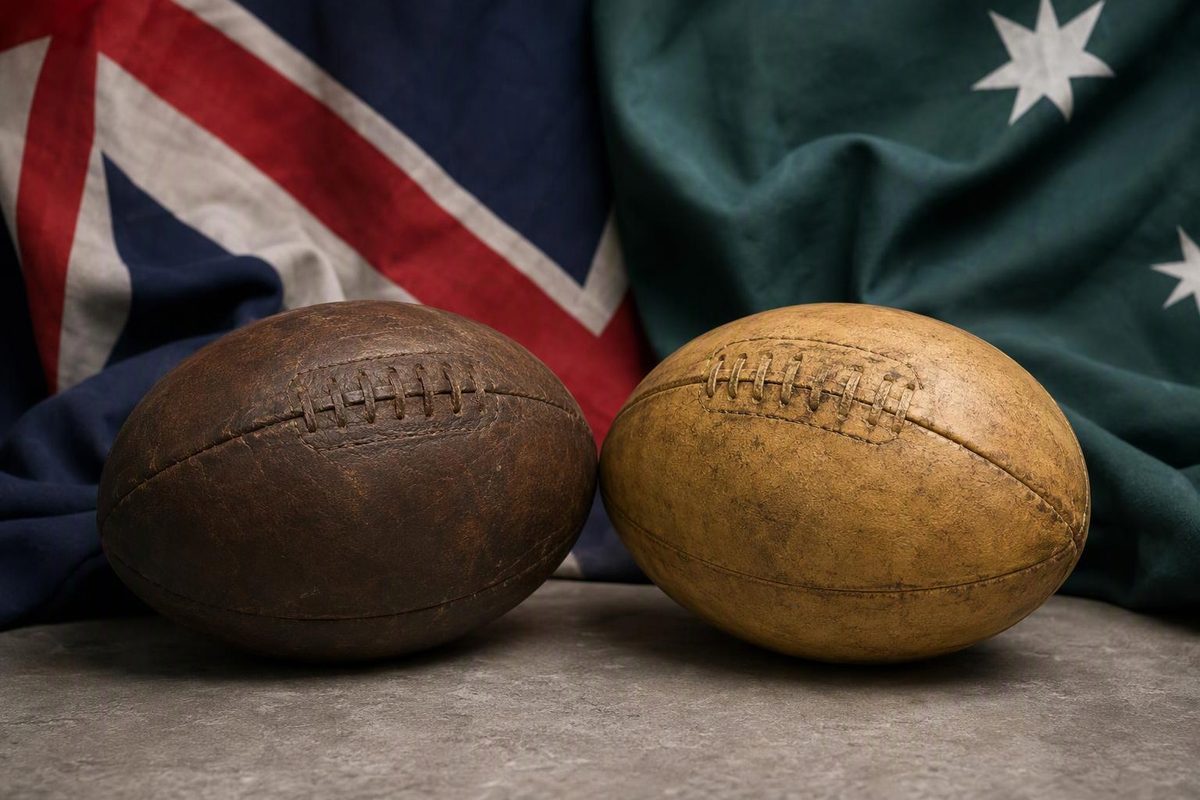
Great Britain and Australia drew 0–0 at Swinton in 1930. See how that Test reached the minimum and why Rochdale’s 3–0 result needs historical context.
The lowest score in a rugby league Test is zero—and the lowest combined match total is also zero. Great Britain and Australia reached that absolute minimum when they drew 0–0 at Station Road, Swinton, on 4 January 1930, in the third Test of the 1929–30 Ashes series. The match record explicitly classifies it as an international Test and records an attendance of 34,709.
For completed senior men’s thirteen-a-side Tests, that result cannot be beaten as a scoring minimum: no match can have a combined points total lower than zero. This is not a claim that Swinton was the only scoreless international.
Team score or total match score?
“Lowest score” can describe two different measures:
- One team’s score: zero points. The opposition may still score heavily.
- Combined match score: both teams’ points added together. A 0–0 draw totals zero; a 3–0 result totals three.
A scoreless team, therefore, does not necessarily mean a low-scoring match. And a winning margin is another measure entirely: a narrow margin can occur in a high-scoring game.
The Swinton Test meets both definitions of the minimum. Neither side registered a try or a goal, leaving each team—and the match as a whole—on zero. The record labels the home side “England [Great Britain]”; BBC Sport’s historical results list uses “GB” for the same fixture. Those naming conventions refer to the same match, not separate results.
The disallowed try that kept it at 0–0
The scoreless finish is remembered for an incident involving Australian halfback Joe “Chimpy” Busch.
According to the NRL’s Hall of Fame account, Busch broke down the sideline following a scrum win in the final minutes and went over in the corner. A touch judge reported that he had touched the corner post while diving over, and the try was disallowed.
The decision remains part of the match’s historical controversy. For the record book, however, the distinction is straightforward: the attempt was not awarded, so it contributed no points. The recorded result is 0–0 regardless of later interpretations of the incident.
What happened next in the series?
The four recorded Tests show why the scoreless draw mattered:
| Date | Result, with the British side listed first | Combined points |
|---|---|---|
| 5 October 1929 | Great Britain 8–31 Australia | 39 |
| 9 November 1929 | Great Britain 9–3 Australia | 12 |
| 4 January 1930 | Great Britain 0–0 Australia | 0 |
| 15 January 1930 | Great Britain 3–0 Australia | 3 |
The Swinton record lists the first two results, while the fourth-Test record confirms the final match at the Athletic Grounds, Rochdale. Great Britain finished with two wins to Australia’s one, plus the draw, and retained the Ashes.
Rochdale’s 3–0 score also needs its era attached. The fourth-Test record credits Stanley Smith with the only try, worth three points, and records no goals. Under the 2026 international laws, Section 6, a try is worth four points, a conversion or penalty goal two, and a drop goal one. A modern 3–0 score would therefore not represent that same scoring breakdown.
For the wider sequence, see the Ashes rugby league Test results by year.