
Where rugby league is most popular—and what popularity means
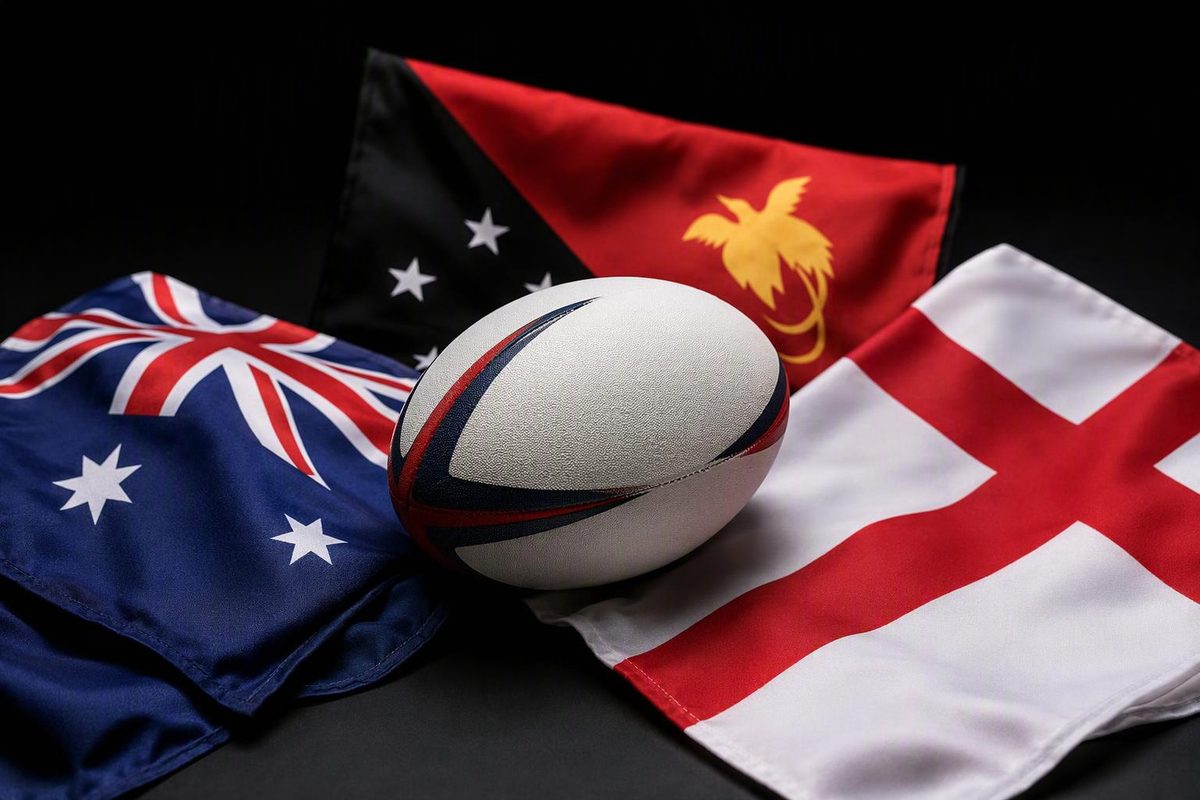
Australia, Papua New Guinea and northern England are rugby league strongholds. See how professional scale, national attachment and participation differ.
For rugby league, Australia and Papua New Guinea are two of the clearest answers—but for different reasons. Australia is a major centre of the professional game; Papua New Guinea stands out for rugby league’s importance to national identity. Northern England, New Zealand and Pacific communities are also important strongholds.
Here, “rugby” means thirteen-a-side rugby league, not rugby union. The two codes need separate answers. Even within league, crowds, participation and cultural attachment measure different things: they should not be combined into a single country ranking.
Australia: a major professional centre
Australia’s traditional rugby league heartlands are New South Wales and Queensland. That regional distinction matters: calling Australia a rugby league stronghold does not mean the sport has an equally strong position everywhere in the country. NRL Western Australia describes those two states as the heartlands.
The NRL’s published figures illustrate the professional game’s reach. Its 2025 annual-report summary, released in February 2026, reported:
- 4.98 million attendances across the year.
- 4.55 million average viewers for the NRL Grand Final.
- 207,744 registered club participants.
Source: NRL’s 2025 results summary.
These measure different things. Attendances count visits rather than unique supporters; the Grand Final audience measures one event; club registrations measure participation rather than spectatorship. The NRL also operates beyond Australia: its season-wide viewing total explicitly covers Australia and New Zealand, so these figures are not a country-by-country comparison of fans.
The broader participation total includes school programs, and the NRL describes its activities as including touch, tag and tackle. It should not be presented as the number of regular thirteen-a-side players. Nor do these figures alone establish that rugby league is Australia’s most popular sport under every measure.
Papua New Guinea: national attachment
Papua New Guinea belongs alongside Australia in the answer, even though its professional-club structure is different. The PNG Chiefs’ official history describes rugby league as part of the country’s national identity and traces its presence back to the 1930s.
That cultural importance is also reflected in the joint government announcement supporting a PNG NRL team. Prime Minister James Marape described the team as a “national unifier” and the project as a “national unification strategy”. Those statements explain how the country’s leadership understands rugby league’s role; they are not a numerical survey of supporters.
PNG’s attachment to the sport therefore should not be judged only by representation in the NRL. The PNG Chiefs are scheduled to begin NRL competition in 2028, rather than already playing in it.
England: strongest in the north
In England, rugby league’s main strongholds are Yorkshire, Lancashire and Cumbria, rather than the country uniformly. An overview of rugby league in England identifies Yorkshire and Lancashire as its heartlands and highlights Cumbria’s amateur game.
Club crowds offer a useful measure of support. Men’s Super League reported more than 1.62 million attendances for its 2025 regular season, with an average exceeding 10,000 per match. Those are competition-wide attendance figures, not a count of individual English supporters. Source: Super League.
New Zealand and Pacific communities
Auckland provides a concrete example of rugby league’s community involvement in New Zealand. In September 2024, an NZRL press release reported 3,500 young players taking part across a national secondary-schools tournament and a Pasifika wellbeing carnival in South Auckland. The carnival included teams representing Tongan, Samoan, Cook Islands, Niuean and Māori communities. Source: NZRL release carried by Scoop.
That example shows why rugby league’s geography extends beyond national borders: support for a Pacific nation can include communities overseas. The Pacific Rugby League Partnership also covers development in PNG, Fiji, Samoa and Tonga, although a development program is not itself a popularity ranking.
Why international results do not settle the question
A successful national team demonstrates competitive strength, not the number of fans. The IRL world rankings use sanctioned senior international results across the current season and three preceding seasons, weighted for opposition, margins, recency and match importance. They do not measure audiences, club participation or rugby league’s place in national life.