
Five Tournaments, Two Champions: The Four Nations Record
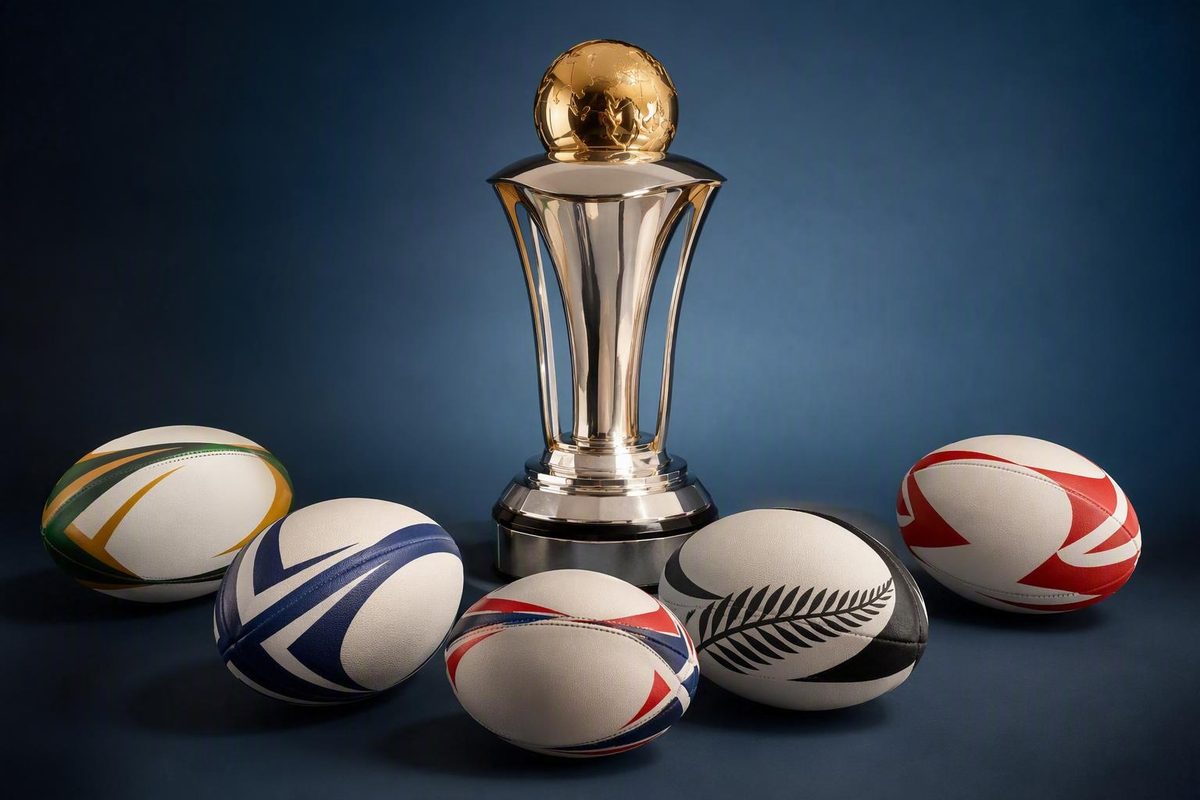
Staged five times from 2009 to 2016, it used a round robin and final. See every edition’s fourth team, champion and deciding result.
The Rugby League Four Nations was a senior international tournament staged five times between 2009 and 2016. Its editions were played in 2009, 2010, 2011, 2014 and 2016, with Australia winning three titles and New Zealand two. Australia, England and New Zealand formed the permanent core, while a rotating European or Pacific participant completed the field in each tournament (Rugby League Four Nations history).
This was the senior rugby league competition, not rugby union’s Six Nations or an unrelated event with “Four Nations” in its name.
The Four Nations at a glance
Each Four Nations brought together four senior national teams for a single round robin followed by a final. Australia, England and New Zealand appeared in every edition, while the fourth berth changed hands each time:
- 2009: France
- 2010: Papua New Guinea
- 2011: Wales
- 2014: Samoa
- 2016: Scotland
The additional place alternated between European and Pacific representation. That gave five countries one appearance each alongside the three core teams, although the qualification route was not necessarily identical at every staging.
The competition was not annual. Three tournaments were held in successive years from 2009 to 2011, followed by editions in 2014 and 2016. Those gaps should not be filled with unrelated four-team competitions or similarly named rugby union events.
International Rugby League describes the Four Nations as the successor to the Tri-Nations and identifies 2016 as the last staging. The precise conclusion is therefore that the tournament was last held in 2016—not that the available evidence establishes a formal decision to abolish it.
How the Four Nations changed the Tri-Nations
The preceding Rugby League Tri-Nations involved Australia, New Zealand and Great Britain. The Four Nations retained Australia and New Zealand while making two structural changes: England replaced Great Britain as the third core participant, and a fourth country entered through a rotating European or Pacific pathway.
| Feature | Tri-Nations | Four Nations |
|---|---|---|
| Number of teams | Three | Four |
| British core entry | Great Britain | England |
| Other core teams | Australia and New Zealand | Australia and New Zealand |
| Additional berth | None | Rotating European or Pacific participant |
The change widened access to an established international contest without removing its Australia–New Zealand core. France, Papua New Guinea, Wales, Samoa and Scotland subsequently occupied the additional berth, one country per edition.
It would be misleading, however, to describe all five participants as products of one uniform qualification system. The regional place rotated, but the documented route depended on the tournament. “Rotating participant” or “qualifier” is therefore more precise than suggesting that a single qualification format operated throughout the competition’s lifespan.
Tournament format and standings points
Each edition began with a single round robin in which every country played the other three once. That produced six preliminary matches. The two highest-placed teams then met in the final, taking a complete tournament to seven matches.
The standings system awarded:
- Two competition points for a win
- One competition point for a draw
- No competition points for a loss
A team therefore had three preliminary matches in which to finish above at least two opponents. Reaching the final did not require a perfect record, but it did require a top-two position after the round robin.
The fourth berth alternated between Europe and the Pacific, without a documented universal qualification process covering all five editions. Scotland provides a specific example: it entered the 2016 tournament after winning the 2014 European Cup, making its Four Nations debut (2016 tournament summary).
Every Four Nations edition, qualifier and champion
Australia and New Zealand shared all five championships. England reached the final in 2009 and 2011 but did not win the tournament, while none of the rotating participants advanced to the title match.
| Year | Fourth participant | Champion | Final |
|---|---|---|---|
| 2009 | France | Australia | Australia beat England 46–16 |
| 2010 | Papua New Guinea | New Zealand | New Zealand beat Australia 16–12 |
| 2011 | Wales | Australia | Australia beat England 30–8 |
| 2014 | Samoa | New Zealand | New Zealand beat Australia 22–18 |
| 2016 | Scotland | Australia | Australia defeated New Zealand at Anfield; score not included here |
The edition sequence, participants and first four final scores follow the competition history’s results record; that record lists New Zealand as the 16–12 winner against Australia in 2010 (edition results).
The title count was:
- Australia: 2009, 2011 and 2016
- New Zealand: 2010 and 2014
Australia defeated England in its first two successful finals before overcoming New Zealand in 2016. New Zealand won both of its titles against Australia, by four points in 2010 and again by four points in 2014.
The rotating berth broadened participation, but it did not broaden the list of champions. Every title remained with one of the two permanent Australasian teams.
What the fourth nations achieved
France, Papua New Guinea, Wales, Samoa and Scotland each appeared once. None reached the final or recorded a tournament win.
Scotland nevertheless produced the strongest result by a rotating participant when it drew 18–18 with New Zealand in 2016. That result matters when assessing the guest teams: a winless tournament record does not mean every performance was equally competitive. Scotland took a match to level terms against a team that had won the previous Four Nations in 2014.
The widest listed result involving a guest team came in 2010, when New Zealand defeated Papua New Guinea 76–12. The difference between the scores was 64 points, the largest winning margin identified in the tournament record.
Together, those two results show the range of outcomes for the rotating countries. Papua New Guinea suffered the competition’s largest listed defeat, while Scotland held a former champion to a draw. Neither result changed the title race enough to put a fourth participant into the final, but they should not be treated as equivalent performances.
Structurally, the format kept Australia, England and New Zealand together while introducing a different European or Pacific opponent at every staging. The championship remained concentrated among the permanent teams, but participation was not restricted to the same three countries.
The last tournament: England 2016
England hosted the fifth Four Nations in October and November 2016. Australia, England and New Zealand returned as the core participants, while Scotland debuted after qualifying through the 2014 European Cup.
Australia and New Zealand advanced to the final at Anfield in Liverpool. Australia won to secure its third Four Nations championship, moving ahead of New Zealand’s two titles. The 2016 tournament summary describes the final as Anfield’s first international rugby league match; an exact final score is not included because it is not supported by the material used for this account.
Reported 2016 tournament figures
A tertiary summary of the 2016 Four Nations reports:
- Matches: 7
- Attendance: 132,655
- Points scored: 259
- Tries scored: 47
- Leading points scorer: Johnathan Thurston, 32 points
- Joint leading try scorers: Blake Ferguson and Josh Dugan, four tries each
These are attributed summary figures, not independently verified official statistics.
The seven-match total was consistent with the competition’s standard structure: six round-robin fixtures followed by the final. Australia’s victory also reversed the result pattern from New Zealand’s two championship years, when the Kiwis had defeated Australia in the deciding match.
Is there a current or 2026 Four Nations?
There is no confirmed current or 2026 Rugby League Four Nations in the available record. International Rugby League says the competition was last held in 2016, which remains the latest verified staging.
Search listings can create the impression that a new tournament has been announced. An AXS page has a 2026-oriented title, but the page itself says there are no upcoming RFL Four Nations events. Its tournament description concerns the 2016 competition, naming England, Australia, New Zealand and Scotland and identifying Anfield as the final venue. The page does not provide a 2026 schedule, event announcement or ticket release.
The available sources also do not establish why the Four Nations stopped after 2016, whether it was formally discontinued or whether it has a direct successor. Any future revival would need to be confirmed through a current governing-body announcement or official fixture listing.
The record therefore stands at five editions and five rotating fourth participants, with every championship won by Australia or New Zealand. Australia finished with three titles and New Zealand with two. The tournament was last held in 2016; neither formal abolition nor a future return is established.